ANTHROPOLOGY MATTERS
SCHOLARSHIP ON DEMAND
THE BOARD
Series Editor – Daniel Miller
Editorial Board – Catherine Alexander : Mukulika Banerjee : Maurice Bloch : Mary Douglas : Richard Fardon : John Gledhill : Olivia Harris : Simon Harrison : Tim Ingold : Suzanne Küchler : Robert Layton : Henrietta Moore : Michael O’Hanlon : Joanna Overing : David Parkin : Nigel Rapport : Jonathan Spencer : Marilyn Strathern : Julian Thomas : Nicholas Thomas
An iniative on behalf of the anthropological community.
This new series focuses on significant contributions that demonstrate the scholarship and depth of the traditional anthropological monograph, which may not have wide commercial appeal, but have unquestionable academic merit. It will also include important collections that open up new themes and research reports that deal with specific development or policy related issues, and are major interventions in current affairs and decision-making. All of these exemplify the way ‘Anthropology Matters’. Such works might never have found publishing outlets, given the increasing commercial imperatives within the publishing industry, but the technology behind this series allows us to retain the integrity of judging new work on merit alone.
Contact the publisher for further details.
Anthropology Matters Vol. 1
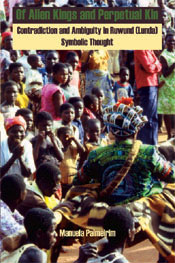 |
Of Alien Kings and Perpetual Kin
Contradiction and Ambiguity in Ruwund (Lunda) Symbolic Thought
Manuela Palmeirim |
|
Of Alien Kings and Perpetual Kin presents a detailed understanding and analysis of the ideology of kingship among the Aruwund (Lunda) of southern Democratic Republic of the Congo. In doing so the text is drawn into addressing a range of important regional themes: the debate on the concept of the 'culture hero' in central African traditions of state formation; the system of 'perpetual kinship'; issues of hierarchy; and the symbolic use of space in royal ritual. All these lead to an analysis that stresses the fluidity and ambiguity of symbolic thought. In this, this innovative work questions the heuristic and theoretical validity of the concept of 'opposition' as used in theoretical models applied to the study of symbolism in which terms are self-contained and mutually exclusive.
Manuela Palmeirim is a Professor of Anthropology at the Institute of Social Sciences of the University of Minho, Portugal.
Hardback, ISBN 0-9545572-7-1, £45.00 (GBP), $90.00 (USD)
Please click here to order.
OUT NOW! - Anthropology Matters Vol. 2
 |
Living with Things
Ridding, Accommodation, Dwelling
Nicky Gregson |
|
Living with Things provides an account of consumption in terms of its centrality to our dwelling practices. Its focus is on the home, particularly on the movement of people and things within and through it in everyday habitation.
Here dwelling is seen as an activity, as doing things with and to the things to hand around us. Being ‘at home’ is achieved through living amongst things, as well as amongst people and other non-human presences, such as pets and gardens. Being at home is achieved through what we do with objects, the things that are acquired and stored, that linger around in our homes, sometimes for decades, and which we may eventually get rid of. These ordinary things make dwelling structures accommodating accommodations; they make them homes.
Based primarily on a former coal-mining village in North-east England, this book explores practices of inhabitation, from moving in or being modernised, to the daily accommodation of sleep and children. It provides a demonstration of what happens to consumption research when it ‘comes home’ and is positioned not in sites of exchange but within the home and in households.
Hardback, ISBN 0-9545572-8-X, £45.00 (GBP), $90.00 (USD)
Please click here to order
OUT NOW! - Anthropology Matters Vol. 3
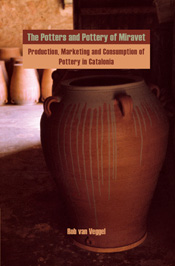 |
The Potters and Pottery of Miravet
Production, Marketing and Consumption of Pottery in Catalonia
Rob van Veggel |
|
This rich account of potters in a southern Catalan village traces the history of pottery production and marketing and the responses of the potters to changing contexts of consumption. By juxtaposing the local, micro-history of a small group of producers (numbering no more than fifty people) with that of Spain’s changing economic and social climate, the author presents a local perspective of producers as affected by and acting upon global developments, ultimately localizing the European transition to one single integrated market economy.
Maintaining a dual focus on subject and object, and thereby combining social and material history, this book demonstrates how physical transformations in the pottery resulted from and affected its role in the social relations people formed as they produced, marketed and consumed it.
.
Hardback, ISBN 978-0-9556400-2-5, £54.99 (GBP), $109.50 (USD)
Please click here to order
OUT NOW! - Anthropology Matters Vol. 4
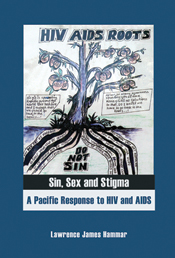 |
Sin, Sex and Stigma
A Pacific Response to HIV and AIDS
Lawrence James Hammar |
|
What happens to national HIV programmes when Science and Religion collide and when both ignore the setting of most infections: in or on the way to marriage?
HIV and AIDS are serious social and public-health problems in Papua New Guinea. After long delays, community-, business- and faith-based organizations have launched an impressive multi-sectoral response. But health-service systems are overwhelmed by the need for HIV antibody testing and counselling, and for treatment with antiretrovirals. Foreign notions of epidemiology, such as 'sex worker', 'risk group' and 'rural/urban', have gained traction despite massive empirical evidence as to their inapplicability. Each of these has fuelled, rather than confronted, the gendered contradictions of marriage and sexuality in Papua New Guinea. Quantitative approaches have fetishized numbers at the expense of enabling changes in social-structure.
Part One of Sin, Sex and Stigma draws upon ethnography, public discourse and archival data to critique public-health policy and epidemiological modelling. Christian-inflected sex-negativity and anti-condom rhetoric are shown to have stymied prevention initiatives. Part Two enlists experts in antiretroviral therapy, sex work activism and ethnography in dialogues focused on strengthening the national response to HIV and AIDS.
A 'hot glow of anger' compelled Lawrence Hammar to write this fiery account of the many factors preventing successful HIV and AIDS interventions in Papua New Guinea. Drawing on his extensive research experience on sexuality and sex work, on cultural and Christian ideologies, and on outrageous stories of denial, abuse, and stigma, Hammar paints a rich and devastating portrait of the history of AIDS in PNG. Read it and weep. Lawrence Hammar is an inspiring reminder for AIDS scholars and activists everywhere of the differences committed social scientists can make to the way things are done.
Leslie Butt, Dept. of Pacific and Asian Studies, University of Victoria
A bold, accessible, and rousingly angry book. Hammar's examination of the problematic reliance on conventional epidemiological categories - such as high risk groups - is powerful, as is his analysis of the ways in which questionable HIV prevalence and behavioral data become privileged over thorough ethnographic research. Hammar's investigation of gendered violence, sexual networking, and the dissemination of condom misinformation is unflinching.
Holly Wardlow, University of Toronto
CONTENTS:
Foreword (Deborah Gewertz); Acknowledgments; Acronyms and Abbreviations Used; Part One: Sexual networking and sexually transmitted dis-ease in the Pacific; Chapter 1 - Introduction: HIV, human rights and the hot glow of anger; Chapter 2 - The women in traffic: Tu kina bus in town and country; Chapter 3 - HIV in history: Serosurveillance and other studies, 1987-2007; Chapter 4 - HIV in discourse: Problems and prospects of the national response, 1987-2007; Chapter 5 - Foreign objects and cognitive dissonance: The strange waters of anti-condom discourse; Part Two: What the experts (still) don't get; Chapter 6 - Courting disaster: HIV and AIDS, secrets and sexscapes in Indonesian Papua (with Sarah Hewat); Chapter 7 - 'What do they expect - angels with dirty faces?': Sexual identities and networking in Papua New Guinea (with Alison Murray); Chapter 8 - 'Trust me, I'm a doctor': Adverse events, side effects and other problems of HAART in PNG (with Mark Boyd); Chapter 9 - Epilogue: The sickness in society; Bibliography; Index
Lawrence Hammar conducted ethnographic fieldwork from 1990-2 on Daru island, capital of Papua New Guinea's Western Province, and worked alongside Papua New Guinean colleagues from 2003-6 during a nationwide study of HIV, AIDS, STDs, and sexual health and behaviour. His most recent project is 'Positive Research For Positive People: strengthening HIV social research capacity in Fiji', working in tandem with the Pacific Island AIDS Foundation and the Fijian Positive Network. He also teaches anthropology and sexuality courses throughout the state of Ohio.
Hardback, ISBN 978-0-9556400-4-9, £64.99 (GBP), $129.99 (USD)
Please click here to order
OUT NOW! - Anthropology Matters Vol. 5
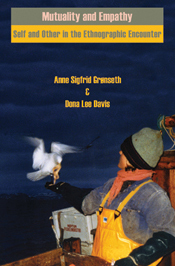 |
Mutuality and Empathy
Self and Other in the Ethnographic Encounter
Edited by Anne Sigfrid Grønseth and Dona Lee Davis |
|
Mutuality and Empathy
Self and Other in the Ethnographic Encounter
Edited by Anne Sigfrid Grønseth and Dona Lee Davis
Focusing on issues of empathy and mutuality, and self and other, as experienced in the everyday challenges of doing participant-observation fieldwork, this volume makes a significant contribution to rethinking the experiential and conceptual construction of the field. The contributors adopt a critical and self reflexive approach that goes beyond issues of voice and representation raised by early postmodern anthropology, to grapple with issues concerning the nature of knowledge transmission that lie at the very heart of the ethnographic effort. They explore how multiple modes of attending, awareness and sense making can shape the ethnographic process. Of note are those unanticipated, less palpable forms of communication that are peripheral to or transcend more formalized and structured research methods and agendas. Among these are empathy, intuition, somatic modes of attention and/or embodied knowledge and identification, as well as, shared sensory experiences and aesthetics. By the elaboration of such concepts the volume as a whole offers a substantial elaboration of a phenomenological approach.
CONTENTS:
Foreword: The universality and the morality of fieldwork - Nigel Rapport; Introduction: Mutuality and empathy: self and other in the ethnographic encounter - Anne Sigfrid Grønseth; Chapter 1: Getting tamed to silent rules: experiencing 'the other' in Apiao, southern Chile - Giovanna Bacchiddu; Chapter 2: Cultural seascapes as embodied knowledge - Anita Maurstad; Chapter 3: Sharing dreams: involvement in the Other's cosmology - Guido Sprenger; Chapter 4: The status of 'non-existing' knowledge: how I came to share some aspects of Malay cosmology - Anne Kathrine Larsen; Chapter 5: Using storytelling to describe and analyze fieldwork experiences of knowledge generation - Theresa Dirndorfer Anderson; Chapter 6: Cultivating taste and class in the garden - Jane Nadel-Klein; Chapter 7: Us--Them, I--We and Me--You: navigating hyphens of identity and alterity among sets of identical twins - Dona Lee Davis and Dorothy I. Davis; Chapter 8: Sharing experiences with Tamil refugees in northern Norway: body and emotion as methodological tools - Anne Sigfrid Grønseth; Conclusion: Speaking-with and feeling-with: the phenomenology of knowing the other - Lisette Josephides; Index.
Anne Sigfrid Grønseth is an Associate Professor at University College of Lillehammer, Norway, where she directs the Research Unite of Health, Culture and Identity. Her research interest include migration, health, identity and a current project on yoga.
Dona Lee Davis has taught Anthropology at the University of South Dakota and the University of Tromsø. Her areas of research and publication include women's health, psychological and medical anthropology, human sexuality and North Atlantic fishing communities. She is currently working on a book about identical twins.
Hardback, ISBN 978-0-9556400-5-6, £49.99 (GBP), $99.99 (USD)
Please click here to order book.
OUT NOW! - Anthropology Matters Vol. 6
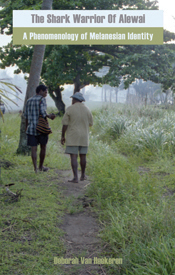 |
The Shark Warrior of Alewai
A Phenomenology of Melanesian Identity
Deborah Van Heekeren |
|
The Shark Warrior of Alewai
A Phenomenology of Melanesian Identity
Deborah Van Heekeren
The first anthropological monograph published on the Vula'a people of south-eastern Papua New Guinea, The Shark Warrior of Alewai considers oral histories and Western historical documents that cover a period of more than 200 years in the light of an ethnography of contemporary Christianity.
Van Heekeren's phenomenology of Vula'a storytelling reveals how the life of one man, the Shark Warrior, comes to contain the identity of a people. Drawing on the philosophy of Martin Heidegger, she goes on to establish the essential continuities that underpin the reproduction of Vula'a identity, and to demonstrate how these give a distinctive form to Vula'a responses to historical change. In an approach that brings together the fields of anthropology, history and philosophy, the book questions conventional anthropological categories of exchange, gender and kinship, as well as the problematic dichotomization of myth and history, to argue for an anthropology grounded in ontology.
CONTENTS:
Preface and acknowledgements; Introduction; Chapter 1 - The people who fish; Chapter 2 - The life and death of Kila Wari; Chapter 3 - Of genealogy and place; Chapter 4 - The problem of history; Chapter 5 - The coming to be of Vula'a exchange; Chapter 6 - Of body, being and food; Chapter 7 - Singing for being; Chapter 8 - From myth as narrative to mythic being; Conclusion - Identity from end to end; Bibliography
Deborah Van Heekeren is a lecturer in Anthropology at Macquarie University Sydney. Her research interests include the cosmology, myth, history and Christianity of the Vula'a of Papua New Guinea.
Hardback, ISBN 978-1-907774-03-4, £55.00 (GBP), $110.00 (USD)
Please click here to order book.